
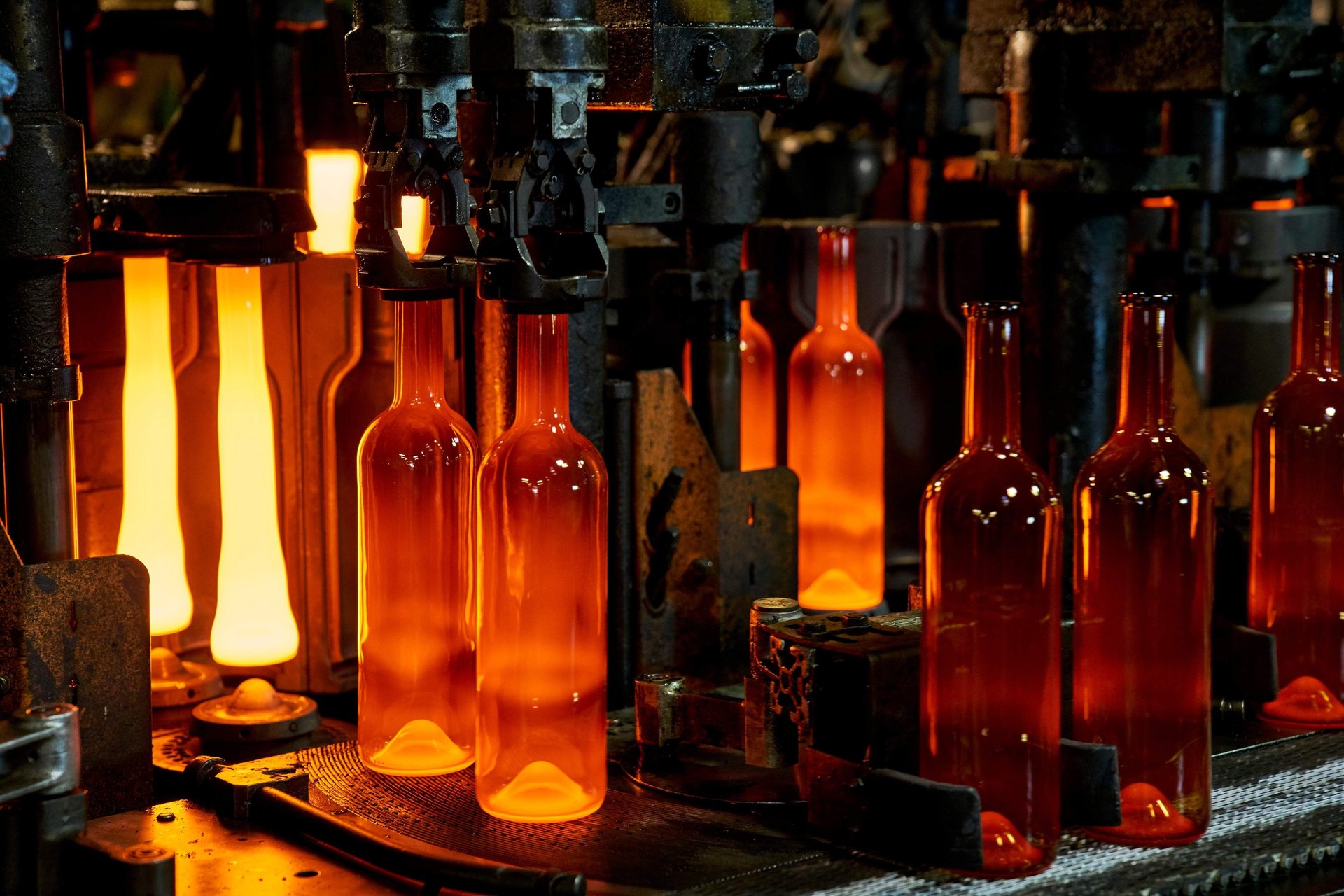
REFRACTORY SOLUTIONS FOR GLASS MANUFACTURING
Glass manufacturing is a continuous, high-temperature process that demands exceptional thermal stability, chemical compatibility, and dimensional accuracy. Furnaces often operate for long campaigns without shutdown, making refractory performance critical to product quality and operational continuity.
Refractories play a central role in containing molten glass, maintaining temperature uniformity, and protecting furnace structures across all stages of glass production.
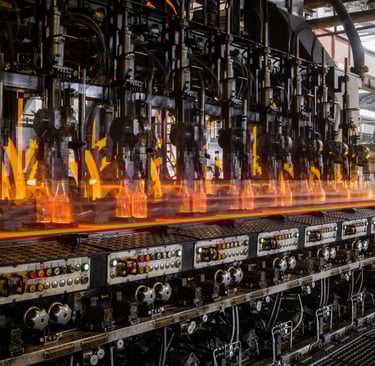
ROLE OF REFRACTORIES IN GLASS PLANTS
In glass manufacturing operations, refractories are essential for:
Withstanding sustained high temperatures over long furnace campaigns
Resisting chemical corrosion from molten glass and vapors
Maintaining dimensional stability to ensure glass quality
Protecting furnace superstructures and steel shells
Supporting uniform heat distribution and energy efficiency
Proper refractory selection directly influences glass purity, furnace life, fuel efficiency, and production stability.
KEY APPLICATION AREAS
Our refractory products are supplied for use across the following glass manufacturing units:
GLASS MELTING FURNACES
Melting furnaces operate continuously at very high temperatures. Refractories must offer excellent corrosion resistance, thermal stability, and low contamination risk.
REGENERATORS
Regenerators recover heat from exhaust gases and are exposed to thermal cycling and corrosive atmospheres. Refractories here must withstand temperature fluctuations and chemical attack.
FOREHEARTHS
Forehearths control glass temperature and viscosity before forming. Refractories must ensure thermal uniformity and dimensional accuracy.
WORKING ENDS
Working ends involve precise temperature control and direct contact with molten glass. Refractories must resist erosion and chemical interaction.
GLASS FEEDERS
Feeders handle continuous molten glass flow and require refractories with high corrosion resistance and smooth surface characteristics.
FURNACE SUPERSTRUCTURES
Superstructures are exposed to high radiant heat and corrosive vapors, requiring refractories that maintain structural integrity over long periods.
rEFRACTORY PRODUCTS COMMONLY USED
Based on furnace design and glass composition, glass plants typically use:
Shaped refractories with high purity and corrosion resistance
Monolithic refractories for joints, repairs, and complex geometries
Insulating materials to improve thermal efficiency and reduce heat loss
Material selection is guided by glass chemistry, operating temperature, and furnace campaign requirements.
OUR APPROACH TO THE GLASS SECTOR
We support glass manufacturers through:
Application-aligned refractory selection
Consistent quality and material purity
Export-ready supply for global glass plants
Inspection support and coordinated logistics
Our focus is on supplying refractories that support long furnace campaigns and stable glass quality.
SUPPORTING CONTINUOUS GLASS PRODUCTION
Reliable refractories are essential for uninterrupted glass manufacturing and product consistency.
We work with customers to ensure materials align with furnace design, operating conditions, and long-term performance expectations.
Looking for refractory solutions for Glass manufacturing operations?
Contact our team to discuss your application requirements or explore our refractory product range.
+91 91060 31803
contact@legionexim.com


© 2026 Legion Exim LLP